He has spent most of his career in business; for many years he ran the Strategy practice at PA Consulting Group. During this time, he began to explore whether the tools and techniques of business strategy could be applied to understanding the health and stability of countries. This research led him to the uncomfortable conclusion that many developed countries – including the US and the UK – are unwittingly pursuing economic policies which will result in the unwinding of 20th century civilisation before we reach the year 2050. Hearteningly, he also concluded that this fate is entirely avoidable.
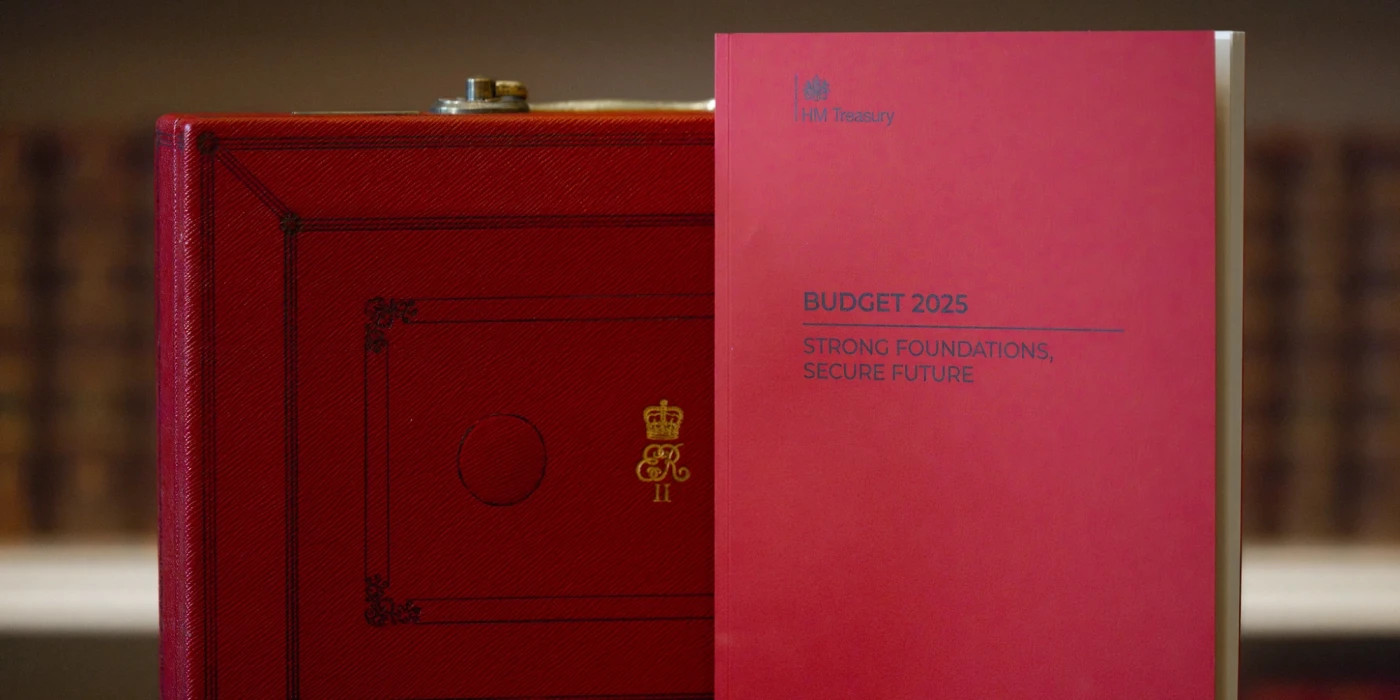
Backbench rebels have made this a better Budget than it would have been, but they have more to do to prevent the UK having the Biden experience
Labour made several manifesto promises, none more important than tackling the cost-of-living crisis and rebuilding the NHS. And theChancellor saidlast week,“Working families will be at the front of my mind as I set out how we will cut NHS waiting lists, cut national debt and cut the cost of living. These are the priorities of the country and my priorities as your Chancellor.”
At the same time, she remains fixed in her determination to stick to her fiscal rules.
But are these two objectives mutually compatible?
They are not: this is a compromise Budget which will enable Labour to get many smaller things right, but condemn it to fail on the biggest issues if it does not challenge its fiscal rules:
Ministers are trying to deliver within the constraints of the fiscal rules; but
The fiscal rules will prevent economic renewal, and that in turn limits public spending and investment; so
We urgently need our MPs to challenge the basis for the fiscal rules.
Ministers are trying to deliver
The fact-checking organisation Full Fact has aGovernment Trackerwhich enables voters to see which of the manifesto promises are being kept. It is clear that many positive initiatives are under way: free breakfast clubs for deprived children, an increase in the minimum wage, and (afterserious pressure from back-benchers) the scrapping of the two-child limit which stops families from receiving Universal Credit for a third or further children born on or after 6 April 2017 (when the cap came into force). Government estimates suggest that these initiatives will lift around 450,000 children out of poverty over the next few years. These measures are extremely important for the poorest families. And they are all things that were not happening under the Conservatives.
And other, less critical but still positive steps have also been taken.
But several of the most important issues are shown as ‘off-track’ such as establishing a £7.3 billion national wealth fund, tackling the housing crisis, and delivering economic growth. And others are shown as ‘in progress’ although there are strong reasons to suppose that they are also off-track, for example, delivering higher living standards and restoring the NHS.
On living standards, for example, this is what has been happening recently to real (inflation-adjusted) wages for the median worker.
Workers in the middle of the income spectrum are seeing no sign that the cost-of-living crisis is receding.
Andour analysis of the 10-year planfor the NHS shows that it is unlikely to deliver anything like the turnaround that the last Labour government produced, and may even weaken the NHS further.
But, obviously, if the Chancellor is right that sticking to her fiscal rules will deliver economic renewal, then there will soon be more money to help those in the middle and to rebuild our crumbling public services. Ordinary voters will finally see their lives improve.
Unfortunately, that seems unlikely.
The fiscal rules will prevent economic renewal
The chart below shows the IMF’s latest (October 2025) forecasts for the UK economy as well as the long-term history of growth: the IMF believes that we are on track for the worst decade since the 1920s.
This is no surprise: we set out exactly why this is to be expected in ouranalysis of the fiscal rules. That analysis showed that, in practice, static fiscal ruleshave not worked, in principle it is hard to see how theycouldwork, and the forecasts they would need, even if in principle they might work, arecompletely unreliable. And they do not even protect us against the ‘Liz Truss effect.’
Austerity did enormous harm to the economy as a whole, to wages and, of course to public services. Economic renewal should tackle all these things.
The long-term trends in weekly pay show the scale of the damage that must be undone.
But if economic growth is set to be poor, as the IMF and others suggest, then wage growth will remain well below the level of increase we saw under the last Labour government, public services will continue to feel the squeeze, and workers will increasingly have to do without them (or pay for private sector services).
The government is in danger of getting to the next election saying,“look at all the positive things we have done”but still with low economic growth, low wage growth and failing public services.
In the US, the Biden administration did many good things but failed to tackle voters’ most important concerns … and the consequences have been disastrous.
Biden delivered progress on many metrics, asBloomberg pointed out, including immigration, health, jobs, inflation, energy transition, total household wealth and homicides. But he didnotdeliver for the median voter. Astonishingly, Biden delivered lower growth in median wages than either Trump or Obama (even though Obama’s first term coincided with the aftermath of the Global financial Crisis).
There were other reasons, such as Biden’s frailty and the confusion in the Democratic campaign, why Trump was elected but, because of the data above, Trump was able to campaignasking,“Do you feel better off than four years ago?”– a killer question in any election.
We cannot afford that to happen in the UK.
We need MPs to challenge the fiscal rules
The successful campaign by backbench MPs – at considerable personal cost – to remove the two-child limit on Universal Credit shows that when enough MPs are determined, they can drive change.
Ourrecent event in Parliamentexplained why MPs need to turn their attention to getting the fiscal rules revised to enable national renewal – and we sketched out how that can be done. Our next event will give more detail on the kind of institutional change which is needed for this government to become the radical reforming government it promised to be and which the country so badly needs.
Our MPs have the power to put the UK onto the path of national renewal. If you think this is important, please share this article with your MP.
This blog was originally posted on The 99% Organisation's website.
Rate this post
Leave a comment
Please login or register to leave a comment on this post.