Hani Salih works as a researcher, designer, writer, editor, and curator. He works across a range of disciplines and practices, from architecture to systems and policy. Hani Salih is interested in the broader contexts in which social and cultural phenomena take place, and is currently exploring this in his work as a lecturer in Architecture and Design, and as a curator of events and debates at De Dépendance in Rotterdam. He is drawn to the built environment’s potential to facilitate and encourage social change on a micro and macro scale and believes that multidisciplinary thinking is the way forward in a complex and interconnected world.
A visit to Huddersfield: National Health Innovation Campus
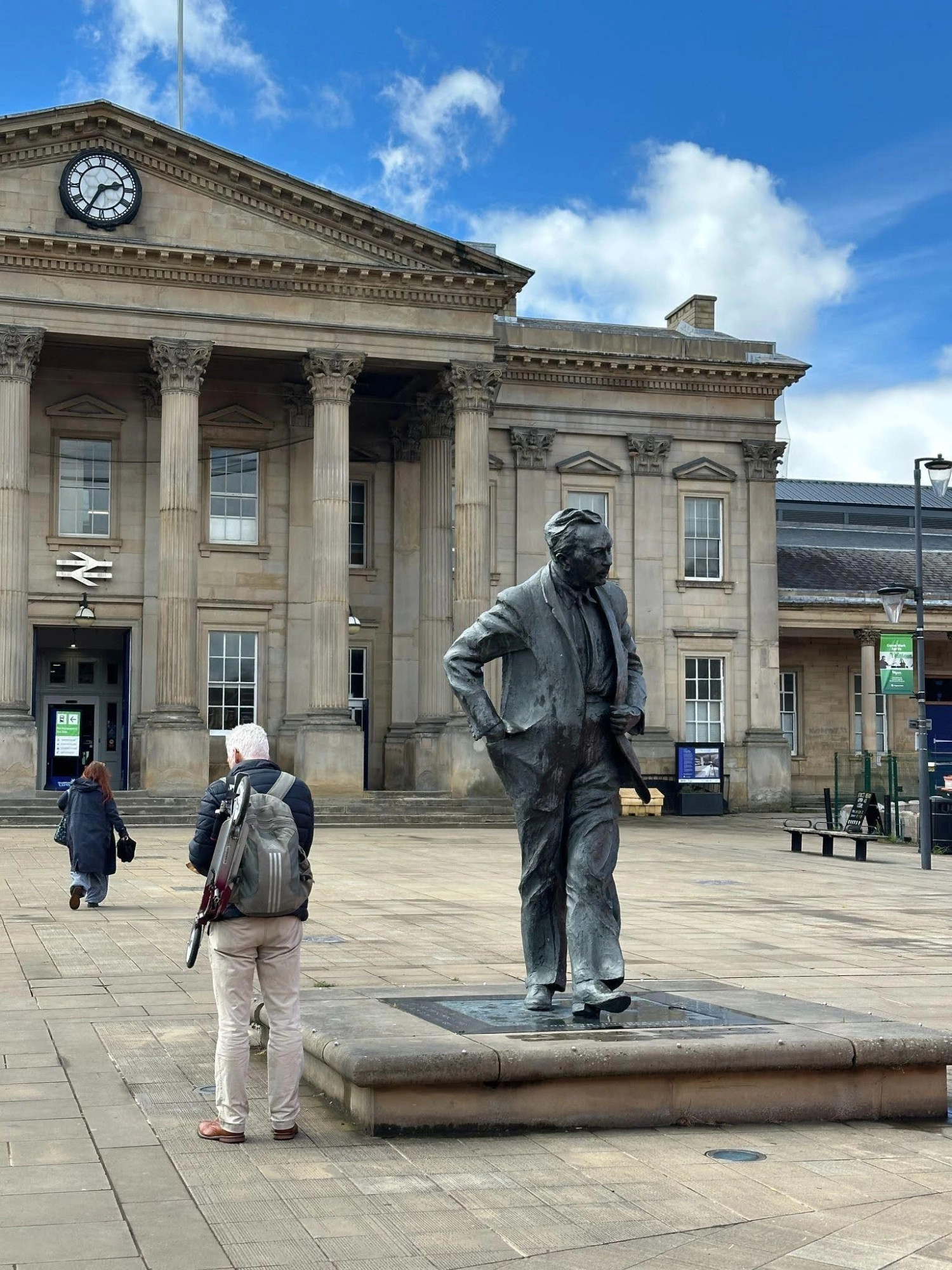
For the Health on the High Streets Commission, Ben Rich, CEO of Radix Big Tent, and I took the day to visit Huddersfield. A town that was once the flourishing heart in the constellation of industrial towns that punctuated the green hills of Yorkshire. A former big mill town, Huddersfield sits in the heart of Kirklees. It is the birthplace of Prime Minister Harold Wilson, who is immortalised by way of a grand statue in front of the train station, but it also hosts Huddersfield Town AFC, a football team currently playing in League One (Third Division of Association Football) and two rugby union teams.
Huddersfield Town AFC calls the Kirkless Stadium (also known as the Accu Stadium) home, just to the North East of the town centre. It is a 24,500 capacity stadium which acts as a major attraction to the town.
I jumped on the 0640AM train from London King’s Cross on a day where the weather was fairly unpredictable, shifting between a light grey drizzle and bouts of blazing heat. A classic British mid-spring day. For those two hours, I was watching these wild swings in the weather as the train cut a blurry line through the countryside, stopping briefly at Leeds before jumping on a slower Transpennine Express train for the last leg of the journey.
Huddersfield also hosts the eponymously named University of Huddersfield, which offers a broad range of courses with a strong vocational emphasis in its offer and a total student population of roughly 25,000. Of those students, 40% are local - hailing from within West Yorkshire. And of those local students, roughly 50% come from the poorest areas in the area. The University’s attendees are said to comprise the highest proportion of students living at home. All these factors paint a very clear picture that the university serves a very local population, which is further supported by its campus’ location in the town centre.
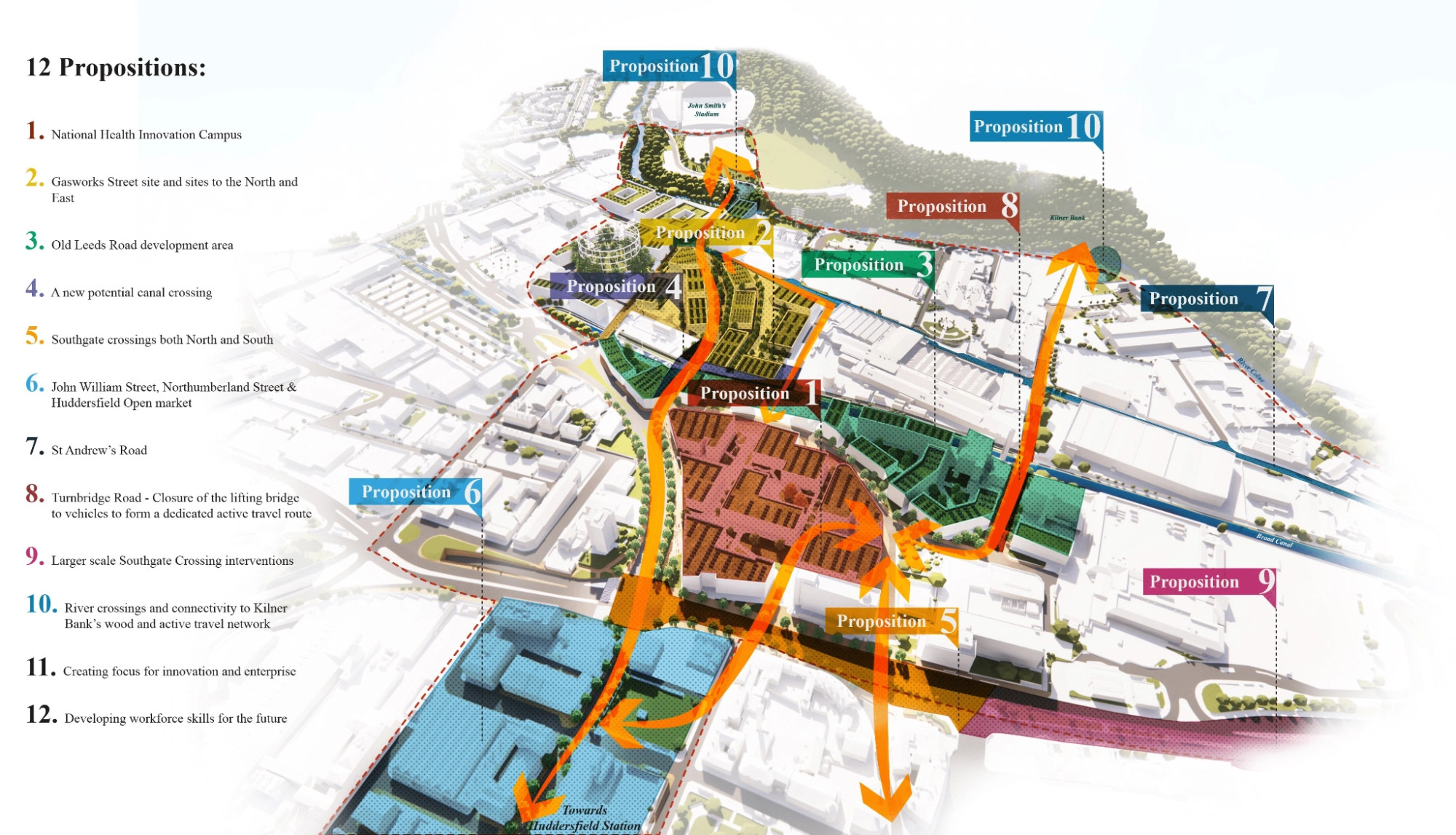
Through the Station-to-Stadium corridor proposal, Huddersfield is in the process of an incredibly ambitious regeneration of its town centre, with a focus on the connection between the football stadium and its station. This is timed in a manner to make the most of the billions of investment pouring into the ongoing Transpennine Express train line upgrade project, as well as the regeneration of the town’s centre through the Our Cultural Heart project led by Kirklees Council - which aims to expand the cultural offer in the town centre to drive regeneration and promote the town as a cultural hub.
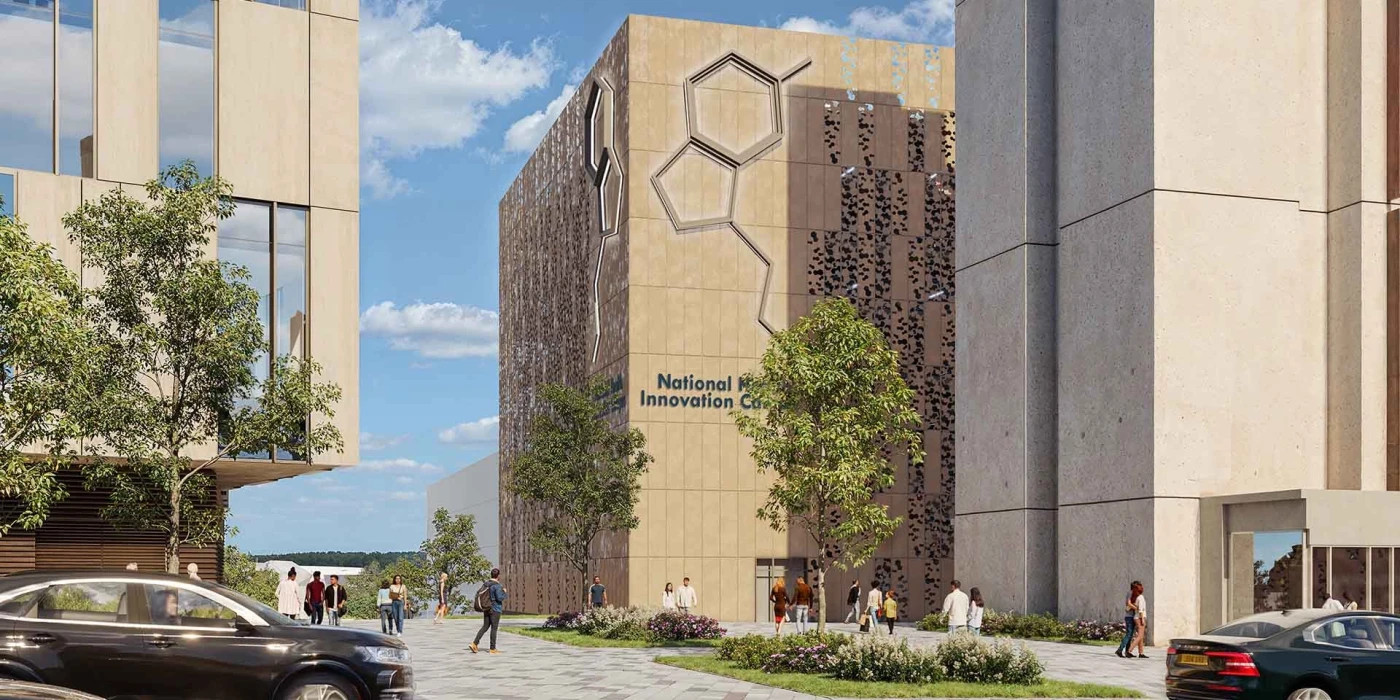
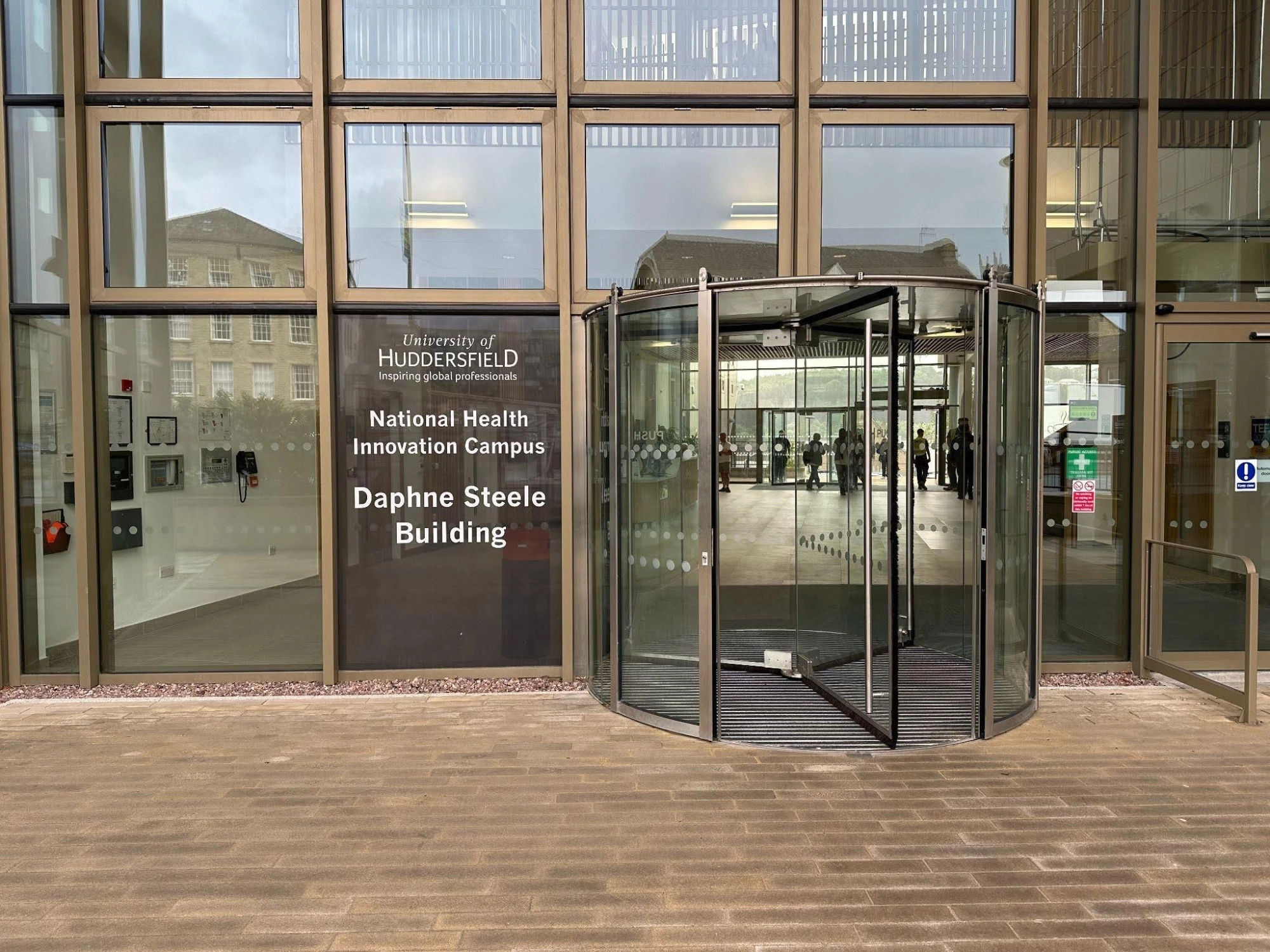
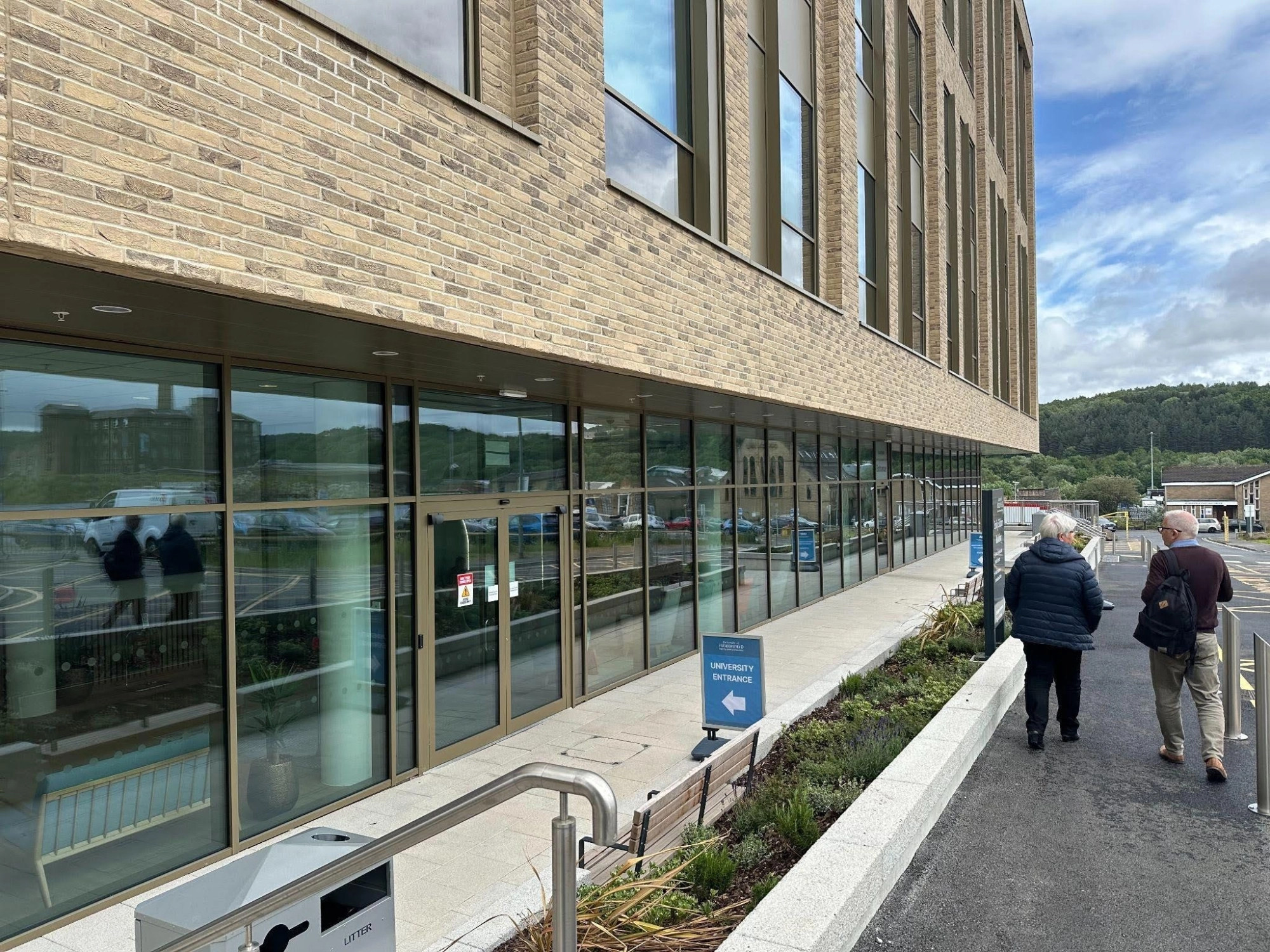
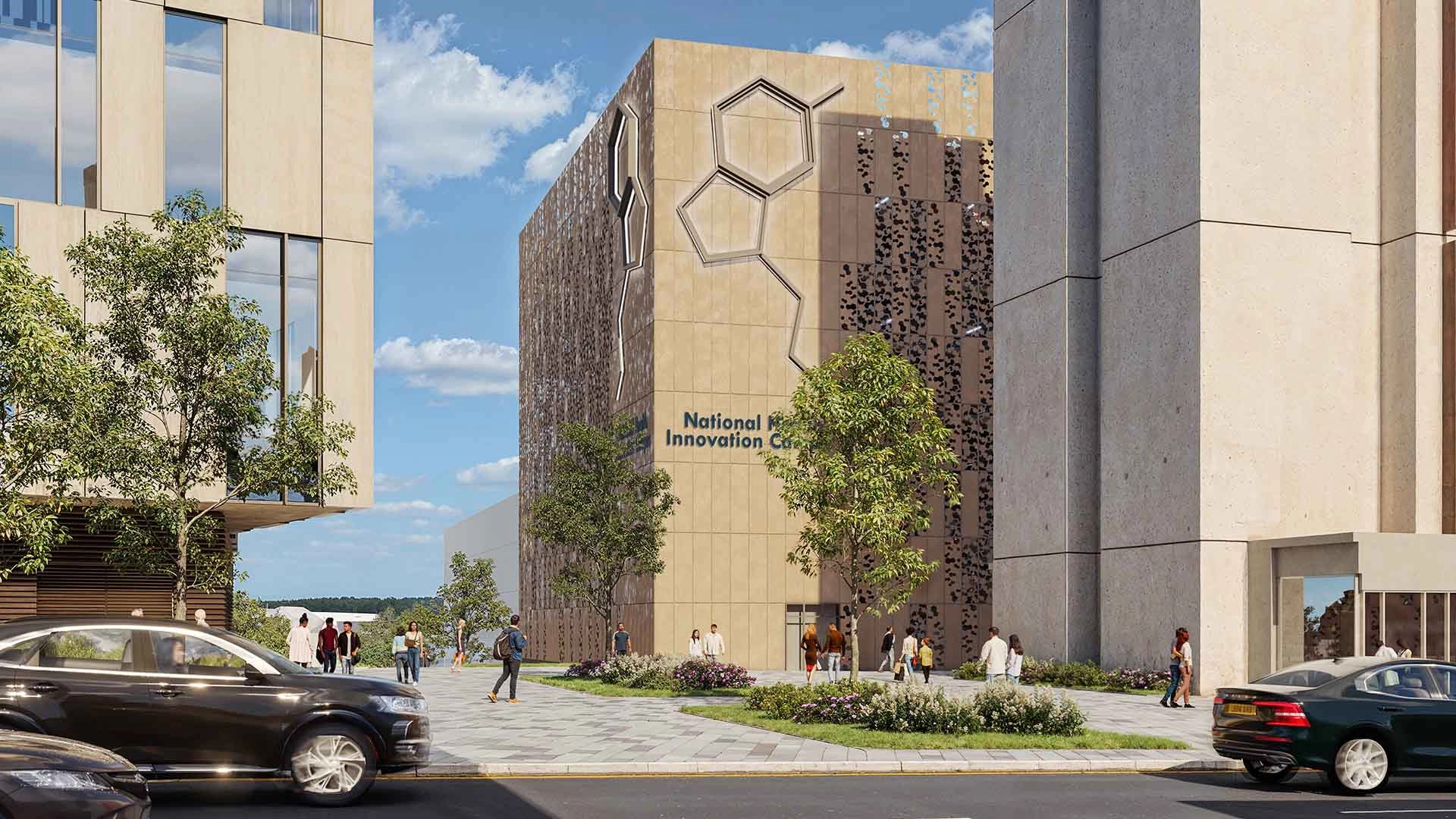
Right in the middle of this corridor, you will find the National Health Innovation Campus (NHIC). A project delivered in partnership with University of Huddersfield and local NHS Trusts. The first of seven planned buildings for this cluster, the Daphne Steele Building is a short five minute walk from the station. It contains within it a whole array of state of the art facilities, mixing education, physiotherapy and research in one WELL certified building. On the ground floor, you will find a public cafe, simulated residential home and ambulance environments, in addition to podiatry clinics, mental health and child clinics on the floors above.
Behind it, the second building, sits the recently opened Emily Siddon Building, which contains a Community Diagnostic Clinic (CDC) delivered in partnership with the Calderdale and Huddersfield NHS Foundation Trust. This clinic offers an MRI and CT scanner for patients. The Siddon building also provides high quality laboratory facilities co-located with flexible offices and co-working spaces, as well as meeting rooms and an event space through its Health Business Innovation Centre on the floor. The aim being to place the innovative and rapid prototyping organisations in direct contact/proximity with healthcare delivery, research and training.
The need for this kind of healthcare provision is evident, especially so in Huddersfield. Yorkshire and the Humber has the 3rd lowest life expectancy for both men and women, the highest levels of obesity and the second highest rate of deaths in infancy. IMD statistics also paint a similarly difficult picture, with just under one third of residents in West Yorkshire living in the poorest areas, compared to only 20% in other parts of the nation.
Addressing this most directly will be the forthcoming Neighborhood Health Hub, which will be the third building to arrive on the campus. The Hub will deliver neighbourhood-level preventative and community-based care right in the centre of Huddersfield. Building directly on the work on the Bromley By Bow Centre and borrowing heavily from their model of community care, but adapting to address the real local need in the town through a focus on tackling health inequalities and workforce and demographic challenges across both Huddersfield and the wider West Yorkshire area. An ambition that was made clear in the naming of the campus through the use of the word “National”, as Liz Towns-Andrews, Regional and Business Lead for the NHIC, told us earlier on in the day.
The Neighbourhood Health Hub will deliver a purposefully and collaboratively designed facility that will provide a robust set of services such as an out-of-hours GP service, urgent primary care, a community pharmacy, multi-disciplinary advanced practice clinics, infrastructure for social prescribing and community wellbeing services.
Although the NHIC is not directly situated on a high street, as a case study it clearly demonstrates the capacity that institutions that are geared towards innovation, and rooted directly in a place, can be leaders in the development and delivery of alternative healthcare provision. By mixing provision with training, public facing services and business and research development facilities proves that a resilient and diverse approach to health-led regeneration is not only possible but viable.
When we asked about catalysts to make this happen, it felt obvious that leadership is key. Much of the work in making truly innovative healthcare provision happen relies on the co-ordination of different stakeholders, be they NHS Trusts, Local Authorities or regional bodies. This work necessitates the presence of strong and forward looking leadership. This is both on an individual level and on an institutional level.
Rate this post
Leave a comment
Please login or register to leave a comment on this post.