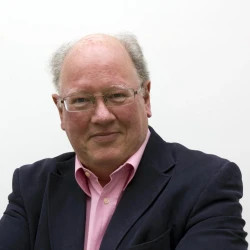
Simon Mundy is the former Director of the National Campaign for the Arts and co-founded the European Forum for the Arts and Heritage (now Culture Action Europe). He is a published author, poet and throughout his career he has been a columnist for various classical music magazines, as well as presenting on radio. He has served on the boards of several arts organisations, including the European Union Baroque Orchestra and the Sidney Nolan Trust. He has been an adviser to the Council of Europe, Ford Foundation and UNESCO, among many others. For a decade he was involved with various units of the War Studies Department at King’s College London dealing with culture and conflict and has directed festivals in Caithness and Utrecht
Funding the BBC, ITN and regional content production
The BBC is being hit from all sides, as the allies of the Murdochs and Rothermeres always wanted it to be. George Osborne reneged on the pledge to pay for over 75's licence fees with a Treasury grant, the FCO stopped paying for the World Service, then successive Tory governments prevented rises to the licence fee; still expecting the BBC to take on the voracious world of digital media while minimising obvious damage to its broadcast output. At the same time, as all governments do, ministers and their acolytes constantly threatened to cut more if the BBC's journalism was not to their liking; if 'impartial' was not interpreted as 'conclude that we are right'.
Damage there has been, though. Thousands of jobs have gone, the commissioning of history, arts and big science programmes has dried up, as have long running drama series unless backed by US platforms, Radio 4 has lost valuable programmes like The World Tonight, Sports coverage has become ever more niche (in the next few weeks pay walls will stand in front of the golf Open Championship, international cricket and the Commonwealth Games – the latter only available now and then on BBC Alba in Scotland). Some proposals, like that to cut the country's only salaried professional choir, the BBC Singers, in its centenary year were fought – as were threats to the orchestras but only to the extent of resorting to the doom-laden phrase 'new funding models.'
Now it is the whole BBC that is having to deal with that phrase. In fact, with the sale of ITV to Sky, the dumbing down of Channel 4, the consolidation of the old independent local radio stations into a couple of national companies with none of the invention and local commitment of the originals, the life is being sucked out of all Britain's public service broadcasting.
The problem is that, as even the new BBC Director General points out, the old licence fee model is not fit for purpose. It is a household tax on appliances that are now either obsolete or overtaken by devices that do not need a house to sit in: devices that render the UK's TV channels a decreasing part of the offering while handing control over to megalomaniac US corporations – most of them Trumpite in their survival of the fittest philosophy. Just as importantly, the licence fee no longer enjoys full support among the public. By 2030 the young won't pay and many of the old won't be able to pay, putting too much pressure on those between 30 & 70, already challenged by bearing the costs of living, social care and education (their own student loans and their children's expectations). There simply will be no appetite for a £200 or more licence fee, even if paid as a monthly subscription. Most will opt to ignore it since it will be impossible to enforce. No more vans looking for aerials.
There are more subtle ways of providing the money – adding a levy to electricity or broadband bills, for example – but these would be seen as stealth taxes and would be at the mercy of the Treasury, whatever a new BBC Royal Charter says. A direct grant from the Treasury could never be ring-fenced properly and would destroy the BBC's claim of independence.
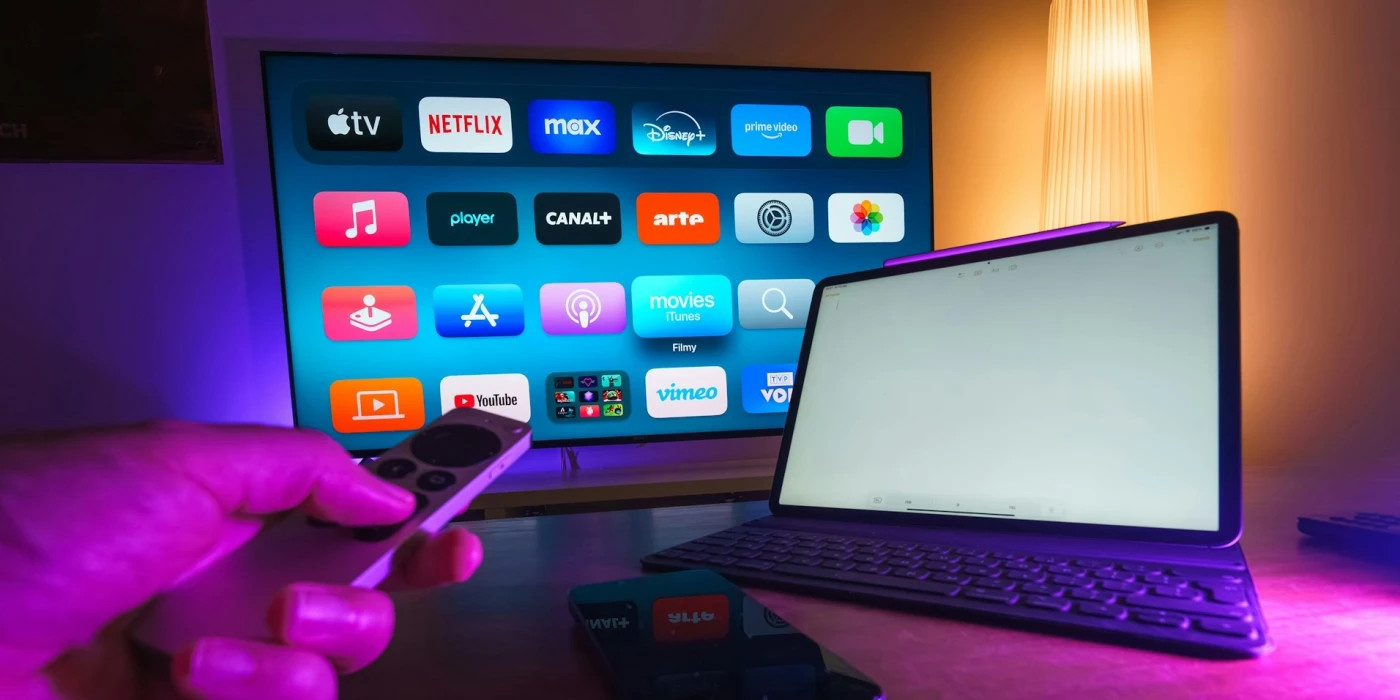
Something else is needed – something that does not tax the inhabitants of these islands for receiving good quality content that is not drowned out by the noise generated by global media interests of dubious democratic and political integrity. Public Service Media (PSM) should be the 'go to' place on anyone's preferred device.
Someone needs to pay, though, and it cannot just be through advertising or subscription. My solution is to make those who are so keen to penetrate and control the UK media market foot the bill, and to extend the concept beyond the BBC to all forms of public service media – extending too that Reithian BBC objective to inform, educate and entertain. The mechanism would be a levy on the parent companies of all media that have content available in the UK. If they provide free to air or online PSM (including sports coverage) that meets impartiality and information, education and entertainment) criteria, they will get most of that money back as a rebate – for example whoever owns C4 (yes, tax the Treasury), S4C, C5, ITV and STV.
They will get more back if they restart the old ITV and Radio Authority regional production companies and put in arts infrastructure as the BBC does – for example theatre (Granada used to own The Stables Theatre in Manchester, Capital Radio used to run the Wren Orchestra). These could be in cities where the BBC does not have an ensemble – e.g. Aberdeen, York, Bristol, Leicester, Inverness and Plymouth.
If a group owns local and regional newspapers and sites, it will also get a rebate. However, like the EU budget, the money has to be collected before it can be rebated, which means that funding is always a year at least ahead of the rebate calculations. Those that want more back have to put more in.
The mechanism should be backed up by a permanent Royal Charter and one for a new Public Media Authority that will cover everyone except the BBC. The money would not go to or through the Treasury. It would be paid into two endowment funds - one for the BBC, the other for the rest of the public service media (PSM). Such endowments earn interest but the Treasury would not tax that interest. Moreover the endowments could accept donations which would, from individuals in the UK, benefit from gift aid.
If set up as it should be this mechanism could guarantee a massive pot, incapable of being raided by the Treasury, manipulated by ministers, or emptied by other departments. The PSM pot could finance everything from ITN to hospital radio, from free-to-air sports to community newspapers.
Rate this post
Leave a comment
Please login or register to leave a comment on this post.