A communications and public affairs professional focused on delivering policy recommendations, briefings and key findings to a political and industry-level audience. Formerly a Parliamentary Researcher for two Labour Members of Parliament with experience on the Defence Select Committee and International Development Committee.
Radix Big Tent at Labour Conference - Big, Bold, Brave, Naive?
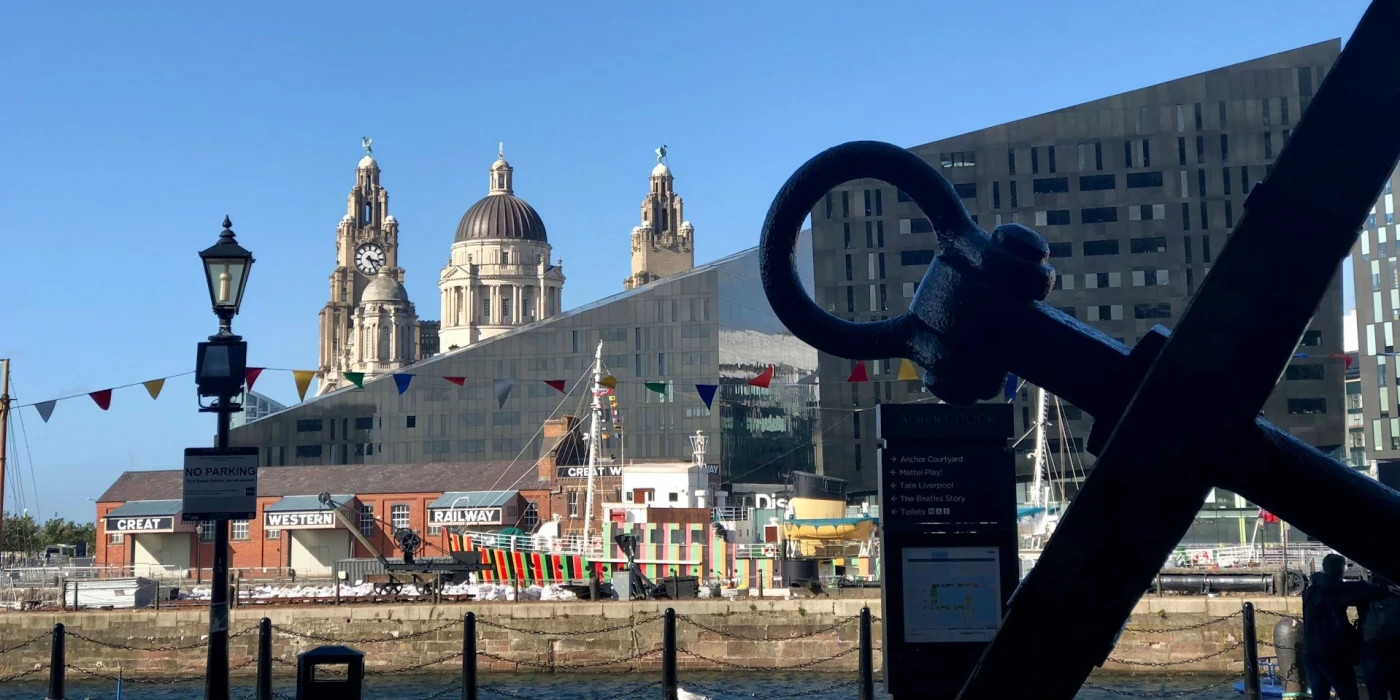
There was a common theme across the Labour Conference in Liverpool last week, and it may even have been an organic one.
Forget the awful tagline, ‘Hope Again’, almost lazily annoyed with itself after having to bother to come up with a slogan. This wasn’t something that will have been passed around on briefing papers by the Labour press team to every speaker. It wasn’t stats on how much more investment ‘X’ industry has had or a repeatable mantra like adding “for working people” after every sentence ad nauseum.
It was a theme of doing anything it takes to re-wire a system that is failing. Whether it is popular or not. This was a systems conference.
Panels on the investment system – of particular interest to Radix and our New Capital Consensus programme - focused on the systemic factors which pool money in the wrong places and the disincentives which prevent capital reaching regional projects in the postcodes Labour are trying to reach.
Panels on the housing system were focused on the barriers to delivery, especially in the social housing sector, but what struck me was this wasn’t a target-led discussion - the policymakers also looked back, as our Housing Commission has recommended, on the existing housing stock to ensure retrofitting is an equally pressing matter. As our ‘Homes without Harm’ report pointed out, 9 out of the 10 homes we’ll be living in by 2050 have already been built. Viability was discussed. Solutions were not forthcoming, but hey, grasping the systemic view is a positive step.
And on the several panels on which I watched Torsten Bell, as the Pensions Minister, he was unequivocal about the need to tear things up where necessary in order to stop the tinkering at the margins producing the same old results. He even confessed that in his Swansea constituency he never ever supports the opposition to planning permission, be that in a brownfield site or across a pretty field. Because, he says, we simply have to build houses and there’s nothing more to it.
Bell was bombastic in his approach, but he also understood the necessity of the ‘rewiring’ that was required to move capital into the right places. For decades our pensions capital has been flowing overseas and failing to improve the places to which we will likely retire. A great example of this is that any of our pensions invested in the MSCI World Index (yours probably will be) sends more money to Apple on any given day than the entire UK economy combined. Exactly what we can do to reverse this was the subject of not one but three different panels across conference. Each one saw a great deal of consensus from industry, regulators and policymakers on the tools available to Torsten, and that the direction of travel was positive.
But rewiring systems is never all that easy. And can prove unpopular even if done with the greatest of care. Nothing typified this more than Andy Burnham’s decision to adjust the triple lock, albeit in 2030 - after the next election. Clearly the lock has been creating an intergenerational strain on the public coffers that to most seems unfair but electorally it has been a sacred cow. Would anyone dare to grasp that nettle?
Burnham has done so, whilst simultaneously kicking the issue into the long grass to allow it to be built into every party’s next manifesto. This tells us a little about how the tone he wants to set for the years ahead, to give speakers at Conference the confidence to radically approach those systems which are holding us back. Burnham was bringing politics back to a political conference, setting out his vision rather than dryly explaining why we could or couldn’t do this thing or the other. That’s for the junior ministers (like Torsten).
But being political and approaching difficult questions has an obvious downside. The reason not many people do it is because you’re likely to annoy almost half of the country. Return to the Brexit question? That’s half of the population against you. Scrap the Triple Lock? Pensioners will be unimpressed. Electoral reform? Brilliant, didn’t we already have a vote on that?
The Triple Lock specifically brought up ghosts of Starmer and Reeves’ biggest misstep, the Winter Fuel Payment cut, which saw any honeymoon of good-feeling evaporate for the new government.
But these are difficult but necessary questions and Burnham has been brave enough to ask them. By doing so, he has given himself the space to set out his vision without crashing the markets: a National Care Service, public control of the water system, a potential return to our largest trading partners. The minutiae can be pored over by the technicians. Let the leader lead.
It may not be enough of course. It’s likely that coalition government will be Labour’s only route to remain in power. But if we’re interested in addressing the systemic issues that have paralysed the UK in housing, care, investment and democratic representation, this was a conference that was genuinely interested in those issues too. Whether they have misjudged the public’s stomach for them is another question entirely…
Blogs carried on this site reflect the independent views of their authors, not the position of Radix Big Tent. Throughout the conference season different members of our team will be attending each of the party conferences and will report back on their main takeaways. We hope you will find these blogs thoughtful and provocative regardless of your own party allegiances, and we welcome your responses to them to hello@radixbigtent.org.uk.
Rate this post
Leave a comment
Please login or register to leave a comment on this post.