Hani Salih works as a researcher, designer, writer, editor, and curator. He works across a range of disciplines and practices, from architecture to systems and policy. Hani Salih is interested in the broader contexts in which social and cultural phenomena take place, and is currently exploring this in his work as a lecturer in Architecture and Design, and as a curator of events and debates at De Dépendance in Rotterdam. He is drawn to the built environment’s potential to facilitate and encourage social change on a micro and macro scale and believes that multidisciplinary thinking is the way forward in a complex and interconnected world.
The potential of community pharmacies
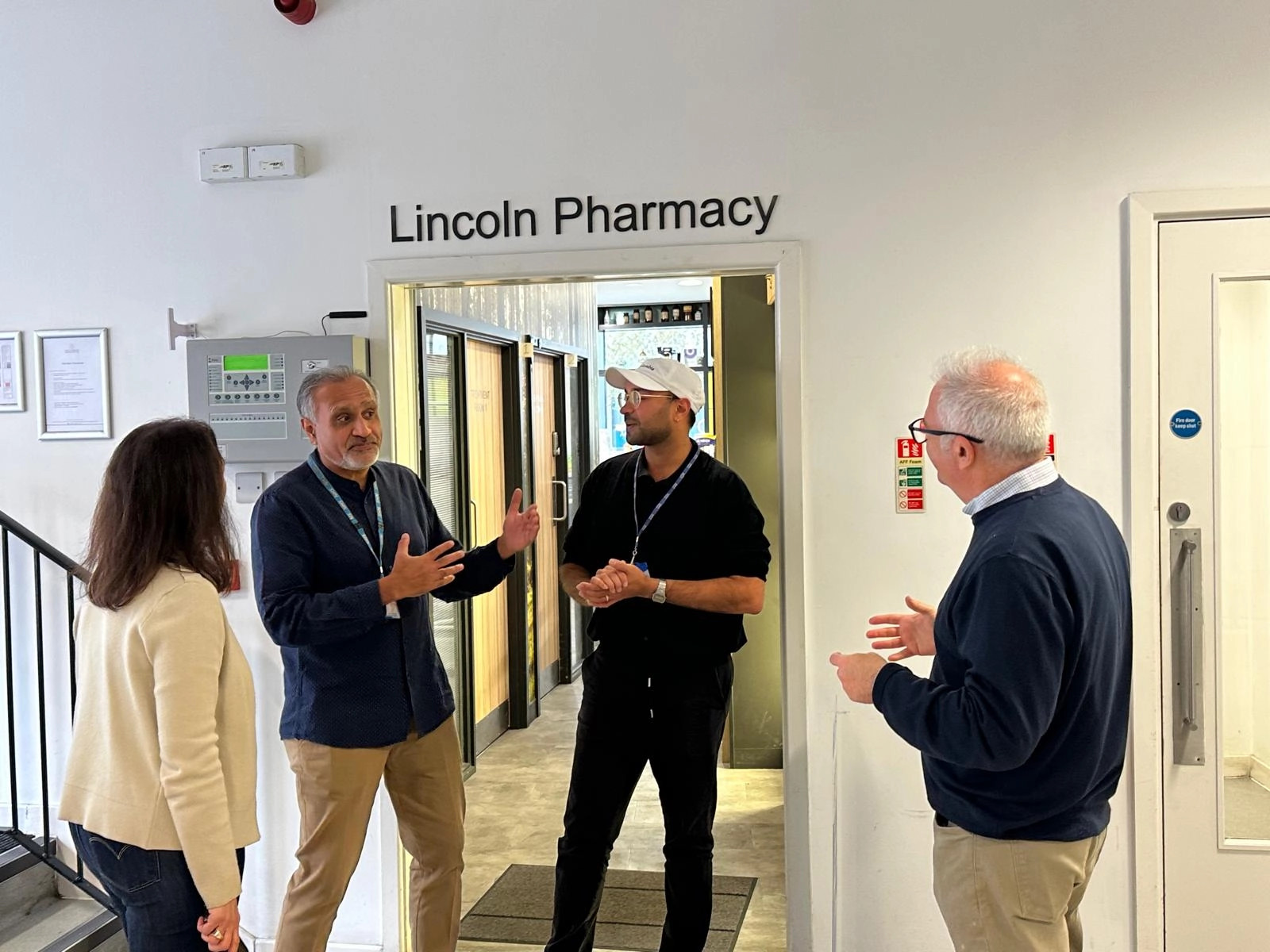
What role can the pharmacy play in helping to make health on the high street possible? That was one of the biggest questions the Radix Big Tent were looking to answer as the Health on the High Street Commission team took a trip down to Lincoln Pharmacy in Bromley last week.
What we saw
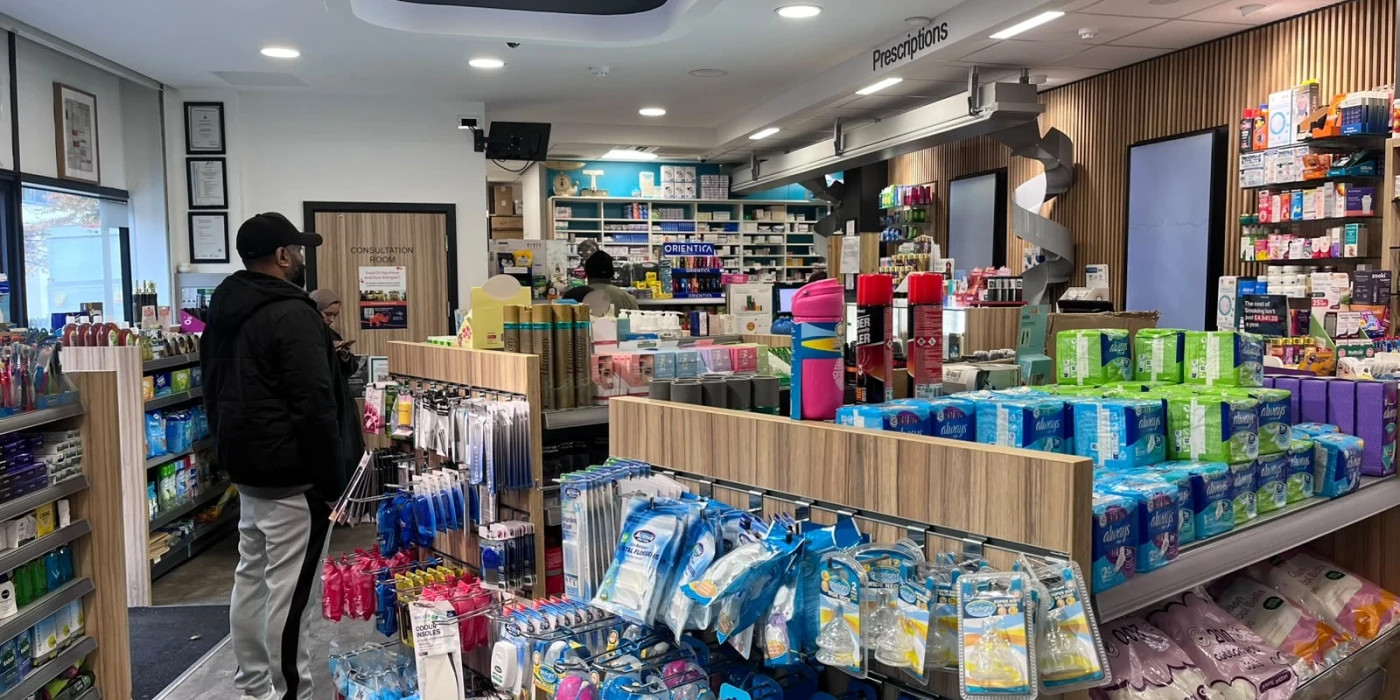
Lincoln Pharmacy is one of two pharmacies run by father-son duo Atulkumar and Sachin Patel. Atul has been a pharmacist in Bromley for 40 years, having moved recently into the new GP practice in 2019 just down the road from their first site. The pharmacy provides a wide range of services to its community - in addition to the work of dispensing medication and offering retail services, it also provides a gamut of other services like vaccinations, phlebotomy (blood test) services and private prescriptions.
Sitting in one of his consultation rooms, Atul talked us through his approach of thinking about the idea of health as a set of systems whilst we sipped on a warm cup of tea. In this framing, he started out by highlighting that what they do is not just anchored solely in terms of seeing pharmacies as retail spaces. Instead, it is about taking a holistic approach to the interconnected nature of health. In real terms, this means taking a preventative approach to care.
In many stories, Atul and Sachin mentioned how they were often able to react more quickly and more directly to serve the needs of their community. Sachin Patel referenced how Lincoln was one of the first places to roll out COVID vaccinations during the pandemic, demonstrating that pharmacies can be an essential part of frontline healthcare responses.
A key part of the puzzle for Patel was the ability to independently prescribe as a pharmacist. In short, this is the ability granted to specific healthcare professionals to assess, diagnose and prescribe medicines for patients directly and autonomously. This is typically done within a clearly defined clinical scope, but effectively cuts out the need for GPs and Doctors to diagnose and treat a number of health issues and helps patients get access to basic healthcare services and treatment far more easily and locally.
Much of Atul’s battle on this front has been on demanding that pharmacists are supported in order to allow them to get funding to cover the costs incurred during training. Under what he calls a two pharmacist model, one pharmacist in charge of prescribing and another that is in charge of dispensing, efficiency and patient experience are balanced.
What seemed clear
The recent business rate relief announced by Burnham in the summer, and expanded by John Healey this Autumn in the budget, were one point of conversation in our visit. Atul explained that the exemption of pharmacies from the relief demonstrates the lack of interconnectedness in thinking about healthcare services and the potential that could be unlocked by folding in community pharmacies into the healthcare system more directly.
Although Pharmacists alone won’t be able to fully address health on the high street, their existing capacity and position as anchors in the community could prove immensely valuable to a national agenda of healthcare transformation. Supporting pharmacists could therefore unlock additional capacity, not just in the provision of additional screening services, but also in providing more cost effective alternatives to clinical work that can be done outside of primary care services and free up capacity where it is most needed.
This also follows when it comes to the training of pharmacists to become Independent Prescribers. Expanding the funding currently available to GPs to pharmacies could help expand the prescribing capacity, covering additional costs of closing a pharmacy whilst undertaking training for the Independent Prescriber status, and help address health issues much earlier and more easily on the high street.
Rate this post
Leave a comment
Please login or register to leave a comment on this post.